Wednesday, May 11, 2011
Building a sound: Modulation parameters
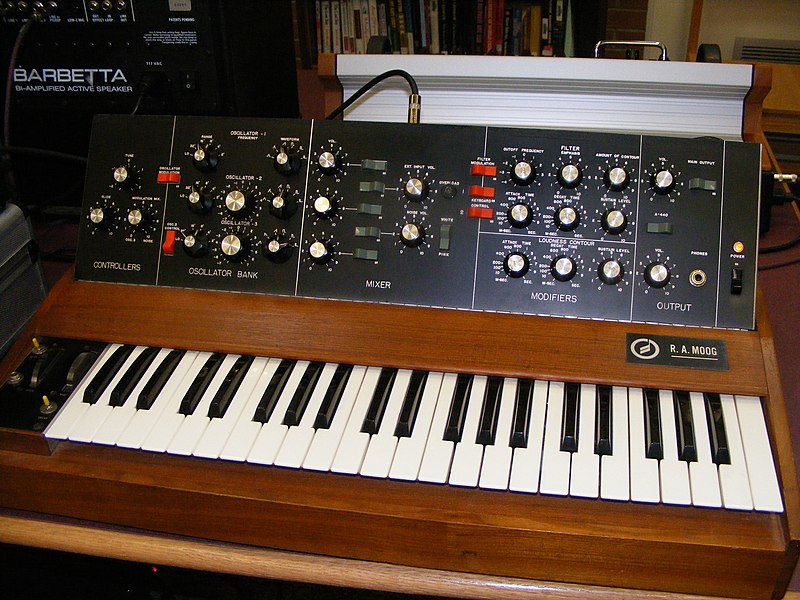
So after you've set up your wave and filter, and changed your amplitude envelopes, where do you go? There's still loads of complexity to put in your sound! Synthesizers generally have tons of modulation parameters. Here's a short list of some modulation elements:
Tuesday, May 10, 2011
Who got you into synthesizers?
For me, it was probably Frankmusik. Awesome track.
Piano cut-ups: Helping you sound like your favorite new artist
Want to get crazy remix-type piano into your sound? Here's a short tutorial on a quick 5 minute approach. I'll be using Logic 9 for mac.
First, create a new track using an EXS sampler piano. You can actually use this technique for any sort of sound, but I will be demonstrating on a piano, as the demo shows below. Next, play some long chords, preferably some that work together. You can mix it up. In this example, I wasn't sure what key I was playing in, just picking some mid to low range chords. After you're finished, make sure they're all quantized so they attack together neatly. It also helps to have each note the same length to get a nice long chord sound. I gave each chord 2 bars to ring out. Next, click this new region, and go up to file and select export region as audio file. This will bring up the export dialog box, and you can name the sound whatever you want and place it in the bounces folder of the current project's folder. Next, find this exported audio in your finder, and drag it into a new track.
Monday, May 9, 2011
Early Synth Pop
I recently watched the BBC documentary Synth Brittania which documented the start of synth pop in Great Britain. I had never heard of a couple of the bands, even though I'm sure I've heard their music. It's a great documentary, and this is one of my favorite tracks from it, called "Only You" by Yazoo (Yaz). Enjoy!
Building a sound: Filters
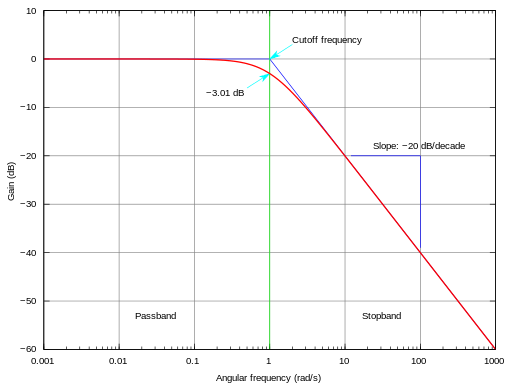
Generally, after you've selected your waveforms, the next step you find in your synthesizer is your Filter. Most synthesizers have a low-pass filter, which is the basis of all subtractive synthesis. Some have band-pass, notch, comb, and high pass filters, although it is unlikely you will find much more than a low pass and high pass filter on an analog synth. The picture above shows the frequency response of a low pass filter. If you picture this overlaid on the graph of the frequency spectrum of the sawtooth wave you can get an idea of how this works. The low-pass filter literally means the lower frequencies will be passed through, and the higher frequencies will be filtered out. This same naming principle applies to all filters, as a high-pass lets through higher frequencies, etc.
Sunday, May 8, 2011
FM Synthesis: A short beginner's guide

As many of you know, the Yamaha DX7 is often one of the first synthesizers you come across while searching for a well known, cheap vintage synth. The DX7 is not a usual synth, however; it uses a different form of programming called Frequency Modulation. FM synthesis is not the type of thing you can learn from just by fiddling with knobs, especially since the DX7 uses only one knob for a data input. Last summer I owned a DX7 for a couple of months and purchased a used book on how to program it from someone online. While I eventually sold the DX7 because I found the user interface for programming too difficult, I still use FM synthesis on my computer using Native Instrument's FM8, a solid program that offers visual representations of the waves you're using and a spectrogram of the different frequencies and their harmonic content. For tutorial purposes, I will be demonstrating on a browser based FM synth from Angry Octopus (who's more recently created the famous Webotribe, a browser based version of the soon to be released Monotribe).
CTRLR: Free Software MIDI Controllers for tons of Synths
Ever had trouble getting MIDI messages to work correctly with your DAW? Look no further. CTRLRs are user-programmable MIDI apps that work with Logic and Ableton, among other programs, or in their in stand-alone app. I sent the creator of micronAU and midiO an email a couple months back wondering if he had cooked up anything else for the DSI Tetra, and he sent me this way to the CTRLR board. While the CTRLRs were originally handwritten, the newest version makes it easy for anyone to create their own for their specific needs, and users can also export their panels for others to use. Best part of all, is that this is all FREE.This is a huge win for anyone who uses a retro-synth that lacks an app, or anyone who uses the DSI synths which have pretty awful software available. Check out the site and download the app. If you're savvy enough, you could create your own CTRLR and post it up for the rest of the forum! Pay it forward, right?
Subscribe to:
Posts (Atom)