Showing posts with label synthesizer. Show all posts

Monday, May 13, 2013

Buying Your First Analog Synthesizer: The 2013 Guide


2014 Edit: Thank you for the tremendous support of this guide!  This has easily become the most popular post of the site.  If you're looking for the latest synths, check out the 2014 analog synth guide.  This current page is still mostly relevant and I don't plan on removing it, so you can still enjoy the 2013 guide!

We're only in April of 2013 and we've already seen a huge influx of awesome gear come out.  I still see a fair amount of traffic on my "What to Buy" article, so I figured it was time to revamp the whole thing for a better look at the cool synths you can buy this year.  So without further ado, I give you Synth Guide 2013.

This guide will be focused on new synthesizers, so don't expect anything that's not currently in production.  Also, I may tend to focus on newer gear more so than older synths.

Special note:  I've included Amazon links on the names of all the synths, so if you're interested in buying from Amazon, use that link!  It'll help support the blog. #ad

Monday, April 2, 2012

Amazing Machines MIDITRIBE I/O Review

The MIDITRIBE by Amazing Machines
I received an interesting piece of gear courtesy of the folks at Amazing Machines, a small company based out of Brazil.  It's the MIDITRIBE I/O, and it's a mod for the Korg Monotribe to give it MIDI In and Out.  The installation doesn't require any soldering, just opening up the Monotribe, screwing in the board, plugging in a small plastic clip to the Monotribe board, and looping in the MIDI In and Out cables through the back cover of the Monotribe (it's worth noting, this mod will void the warranty on your Monotribe immediately).  The MIDI ports themselves are high quality and metal, so they won't crack or break.  There are a few different ways to have the MIDI cables attached; I have the way recommended for quickest use by Amazing Machines which has the MIDI cables coming out of the battery compartment.  I haven't been able to shut the battery compartment due to the cables, but the batteries stay in well enough where I don't need it for now.  If you have the wall adaptor for the Monotribe, you don't need to worry about this.  You could, of course, drill small holes in the side of your Monotribe to let the wires hang out and close the battery compartment, or even create proper MIDI ports right in the side of the Monotribe.  It's up to you, but the very basic setup is easy and only requires a medium size and smaller screwdrivers.

Wednesday, September 7, 2011

Synthesizer Exhibit in Berlin


Got a very cool email a couple days ago from Germany about a synthesizer exhibition.  I don't know much about the event, but I've read it's actually ending tomorrow, but if you're in Berlin I highly recommend checking it out while you can it ends the 10th, so make sure you check it out!  You can see some pictures here.  There's also more information at that link.

The synths come from the mighty Synthesizer Studio in Hamburg.  You can view their website here.  The site lists some records done at the studio (which I'll now have to check out) as well as all the awesome gear-- I'd love to hang out at that studio.  Be sure to check out that site for more information.  Why can't we have more great synthesizer institutions in the US?

Monday, August 29, 2011

Jordan F - Definitely Miami


Unfortunately these days I've just started class again (surprise, I'm a college student) so I've recently been reacquainted with a lot of friends-- hopefully it won't detract too much from the post flow of the site, but you never know.  Jordan F's tracks add the perfect soundtrack the night rides in the car.

I've been getting an influx in reader submissions lately (thanks for sending your stuff in! I promise to respond to everything) and this one in particular caught my attention, and it definitely fits here considering I've got blue neon writing and you guys seem to love the 80s Nu Disco style.  Jordan F's new three song set is perfect for fans of the retro.  I actually immediately bought this EP as soon as I heard it I liked it so much, and you can even get it for free if you want over at his bandcamp, although I think you'll agree, it's better than free.  What better way then to kick off the end of summer and month of September with some great retro vibes?  Bonus: the artwork is straight vintage too.  Check out "Definitely Miami" above and "Cupido" below.

Wednesday, August 10, 2011

Michael Jackson's Keyboards


Hey readers, hope you're all doing well.  Make sure you check back tomorrow (Thursday) for another big interview!

Have you ever been curious about what type of synths Michael Jackson used?  The King of Pop's sounds are incredibly famous and synonymous with the 80s.  Keyboard Magazine has put together an article on what types of sounds were used in Jackson's old records and have a comparison to what would have been used on his This Is It tour.  While it's always sad MJ is no longer rocking, talking his synths is a good way to pay tribute.  The article is here, but here are some of the cliff notes:

Wednesday, May 11, 2011

Building a sound: Modulation parameters


So after you've set up your wave and filter, and changed your amplitude envelopes, where do you go? There's still loads of complexity to put in your sound! Synthesizers generally have tons of modulation parameters. Here's a short list of some modulation elements:

Monday, May 9, 2011

Building a sound: Filters

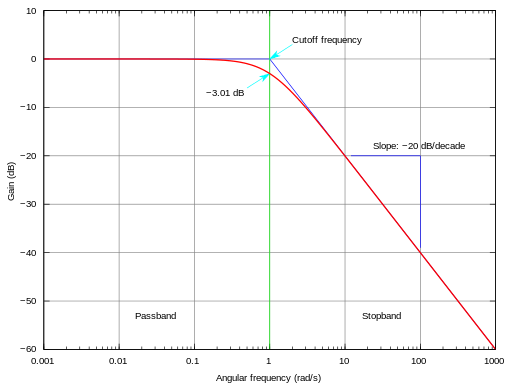
Generally, after you've selected your waveforms, the next step you find in your synthesizer is your Filter.  Most synthesizers have a low-pass filter, which is the basis of all subtractive synthesis.  Some have band-pass, notch, comb, and high pass filters, although it is unlikely you will find much more than a low pass and high pass filter on an analog synth.  The picture above shows the frequency response of a low pass filter.  If you picture this overlaid on the graph of the frequency spectrum of the sawtooth wave you can get an idea of how this works.  The low-pass filter literally means the lower frequencies will be passed through, and the higher frequencies will be filtered out.  This same naming principle applies to all filters, as a high-pass lets through higher frequencies, etc.