
Monday, May 9, 2011
Early Synth Pop
I recently watched the BBC documentary Synth Brittania which documented the start of synth pop in Great Britain. I had never heard of a couple of the bands, even though I'm sure I've heard their music. It's a great documentary, and this is one of my favorite tracks from it, called "Only You" by Yazoo (Yaz). Enjoy!


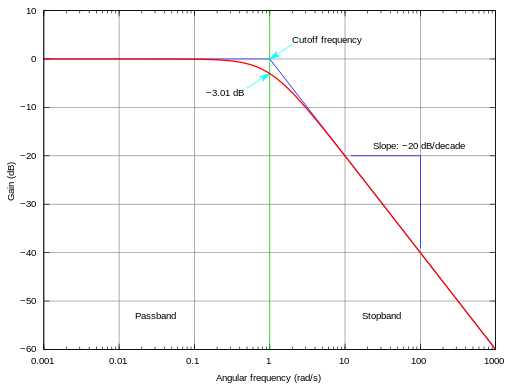
Building a sound: Filters
Sunday, May 8, 2011
FM Synthesis: A short beginner's guide


As many of you know, the Yamaha DX7 is often one of the first synthesizers you come across while searching for a well known, cheap vintage synth. The DX7 is not a usual synth, however; it uses a different form of programming called Frequency Modulation. FM synthesis is not the type of thing you can learn from just by fiddling with knobs, especially since the DX7 uses only one knob for a data input. Last summer I owned a DX7 for a couple of months and purchased a used book on how to program it from someone online. While I eventually sold the DX7 because I found the user interface for programming too difficult, I still use FM synthesis on my computer using Native Instrument's FM8, a solid program that offers visual representations of the waves you're using and a spectrogram of the different frequencies and their harmonic content. For tutorial purposes, I will be demonstrating on a browser based FM synth from Angry Octopus (who's more recently created the famous Webotribe, a browser based version of the soon to be released Monotribe).
CTRLR: Free Software MIDI Controllers for tons of Synths
 Ever had trouble getting MIDI messages to work correctly with your DAW? Look no further. CTRLRs are user-programmable MIDI apps that work with Logic and Ableton, among other programs, or in their in stand-alone app. I sent the creator of micronAU and midiO an email a couple months back wondering if he had cooked up anything else for the DSI Tetra, and he sent me this way to the CTRLR board. While the CTRLRs were originally handwritten, the newest version makes it easy for anyone to create their own for their specific needs, and users can also export their panels for others to use. Best part of all, is that this is all FREE.
This is a huge win for anyone who uses a retro-synth that lacks an app, or anyone who uses the DSI synths which have pretty awful software available. Check out the site and download the app. If you're savvy enough, you could create your own CTRLR and post it up for the rest of the forum! Pay it forward, right?
Saturday, May 7, 2011
Yes Giantess
I probably won't make many music posts on this blog, but one band that I don't hear enough about about is Yes Giantess. They're an old school synth pop band with Michael Jackson and Prince influences. Check 'em out. They can be seen using a Yamaha DX7 and a MicroKorg and what appears to be some sort of Roland Jupiter. EDIT: It's a Jupiter 6. Thanks to Z from the VintageSynth forums!
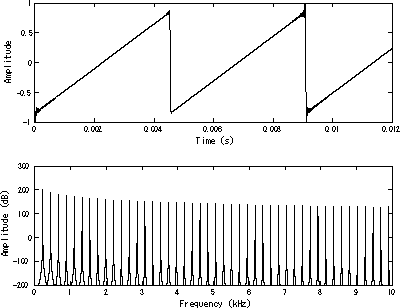
Building a sound: Choosing a waveform

Soviet Synths
Have you ever heard of soviet synthesizers?
I came across one of these by accident a few months ago on eBay and had never heard of them. Currently, I can only find a couple of the one in the video above (The Polivoks) on eBay, but they look pretty cool (excuse the weirdness in the video above). Definitely an interesting buy for someone who has the money. Unfortunately, most of us probably can't read the russian so I have no idea what the parameters are, although the one months ago had a translation of all of the parameters.
There's a nice site with tons of them listed here.
Subscribe to:
Posts (Atom)